
ABOUT
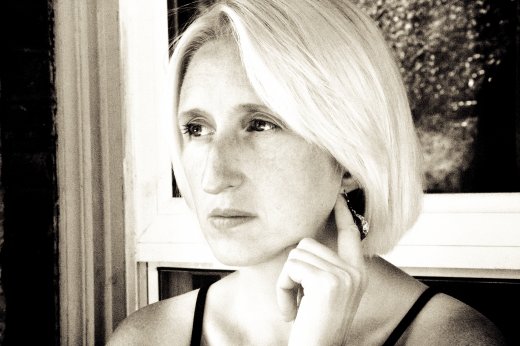
EWA TRĘBACZ
[ pronounced Eva Trembatch ]
I am a Polish-American composer, an interdisciplinary artist, and a violinist-in-disguise.
Collaboration with other artists, understood as an exchange of creativity, is essential to my work.
Exploring the unique interaction between the human subjects and their acoustic environment, I often use space as a catalyst for improvisation, working through Ambisonic recording sessions in acoustically impelling spaces. By overlapping such recordings on live performances, I strive to create an illusory continuum between real and synthetic spaces.
Sounds from space. About the music of Ewa Trębacz. By Maciej Jabłoński. Glissando, March 1, 2023.
Places, Spaces, Encounters. A conversation with Ewa Trębacz. An interview by Anna Niedźwiedź, 2013.
***
Ewa comes from Kraków, Poland, where she studied music from an early age. She earned her first music degree - in violin performance - from the M.Karłowicz School of Music in Kraków. She continued her music education at one of Poland's best conservatories, the Academy of Music in Kraków, where she studied composition under Bogusław Schaeffer, graduating with a Master's degree in 1999. She also holds a Bachelor's (1997) and a Master's degrees in Science (2000) from the Kraków Academy of Economics (current University of Economics), where she majored in Informatics.
Ewa first came to the United States in late 2000, joining many of her peers leaving Poland at that time in hopes of better professional and educational opportunities. In 2004 she became one of the first doctoral students in Digital Arts and Experimental Media (DXARTS) at the University of Washington in Seattle, graduating with a Ph.D. in 2010 with her audiovisual immersive work Errai. Currently Ewa works at DXARTS as a Research Scientist, where her main focus is on computer music and immersive media. While in Seattle, Ewa returned to violin performance after private studies with Finnish-born violinist Ilkka Talvi.
Ewa Trębacz's works have been presented, performed and broadcast in over 30 countries on four continents, and have been featured in Organised Sound, Neue Zeitschrift für Musik, and many other music magazines. In 2009, her work things lost things invisible for Ambisonic space and orchestra, was recognized as work recommended by the 56th UNESCO International Rostrum of Composers in Paris, representing 27 radio stations from around the world. Her monographic CD, including two chamber works and three orchestral works, was released in 2013 by the Polish Radio, Polish Composers’ Union and Polish Music Information Center (polmic.pl).
Ewa Trębacz has received composing commissions from the Academy of Fine Arts in Kraków, Poland (1998-2005), the Klangspuren Festival in Austria (2005), the International Contemporary Music Festival "Warsaw Autumn" (2007), the Polish Composers' Union (for Polish Radio Symphony Orchestra, 2012), the University of Washington School of Drama (2015), Seattle Modern Orchestra (2016), Seattle-based ensemble Kin of the Moon (2018), the National Forum of Music in Wrocław, Poland (2020), Nonsequitur Seattle (2021), and the North Corner Chamber Orchestra NOCCO in Seattle (2022).
She has been a recipient of stipends and grants from the Polish Ministry of Culture and Art, the City of Kraków, the Mid Atlantic Arts Foundation / USArtists International and the Allied Arts Foundation in Seattle (2018 Artist Award "Listen UP! Music by Women"). Her electroacoustic compositions have been performed at ICMC (International Computer Music Conference), SEAMUS (The Society for Electro-Acoustic Music in the United States Conference), New York City Electroacoustic Music Festival (NYCEMF), Mise-En Festival, NYC, SPLICE Festival II (BGSU), and several other festivals.
 girlbot@ewatrebacz.com
 BabelScores
 Youtube
 SoundCloud
 Facebook